Booking Engine Fees: The Hidden Cost Most Owners Ignore in 2026
Booking Engine Fees: The Hidden Cost Most Owners Ignore in 2026
Most owners look at booking engine fees and think they’re being smart. They compare commissions, monthly charges, and card fees, then pick the one that “costs less.” Meanwhile, the most expensive booking engine is often the one that makes guests quit. No complaint, no email, no phone call. Just abandonment, and you only notice later that direct is weak again.
If you want your direct channel to behave like a real sales channel, this is for you. If you’re fine blaming “the market” every time conversions drop, or you don’t want to look at what guests actually see, we’re not for you. If this feels uncomfortable, we are not for you.
What quitting looks like in real life (and why you don’t see it)
A guest doesn’t “decide not to book.” They get interrupted. The page takes too long. The total price changes late. The payment step feels weird. They can’t tell if it’s safe. On mobile, the button is tiny or the calendar jumps around. They close the tab and go back to Booking.com because it’s familiar.
You never hear about it. There’s no angry message saying “your checkout was annoying.” Most guests don’t even remember your brand name after 10 minutes. They just move on, and your analytics shows a soft decline that looks like seasonality, competition, or bad luck. That’s why this cost stays hidden.
Owners often tell us, “Our engine is fine, it works.” And yes, it technically works. That’s not the bar. A booking engine can be “working” and still quietly losing you the guests who were closest to paying.
Why owners ignore this cost: invoices are visible, losses are not
Fees show up on invoices. You can circle them with a pen. You can argue about them. You can feel in control because you’re comparing numbers you can see.
Conversion loss doesn’t show up as an invoice. It shows up as a story you tell yourself. “People are booking later.” “They’re price sensitive.” “It’s a strange year.” Sometimes those things are true. But we’ve seen many cases where the real issue was the last two minutes of the booking path.
This is the trap: you treat direct bookings like a branding problem, when it’s often a checkout problem. Not always. Often. And because it’s invisible, it gets ignored until you’re already paying for more ads, more OTA dependence, and more discounts to force demand.
If you want a useful mental model, read how the industry talks about conversion rate and friction on platforms like Think with Google. They don’t call it “design.” They call it revenue.
Cost vs loss: one is planned, the other is accidental
A cost is planned. You accept it because you’re buying something real: distribution, software, support, payment handling, reporting. You can budget for it and decide if it’s worth it.
A loss is accidental. It’s money you could have kept, but didn’t, because the guest didn’t finish. And the worst part is you can’t even argue about it with anyone, because nobody can show you the invoice for “200 people got annoyed and left.”
Owners can accept costs. They should not accept losses they don’t even see. Especially not in tourism, where the same room night can be sold direct or sold through an OTA with a very different net result. When direct underperforms, you pay for it twice: once in commissions, and again in the extra effort you put into driving traffic that doesn’t convert.
If you want a clear definition of conversion rate and how it’s measured, even Wikipedia’s overview of conversion marketing is enough to frame the idea. The important part is not the definition. It’s that conversion is measurable, and friction is usually the reason it drops.
The hidden friction points that kill bookings without making noise
Owners usually focus on the “fee line” and ignore the “feeling line.” Guests don’t do math the way you do. They react to clarity, speed, and trust signals. When those are weak, the guest’s brain flags risk, and risk kills bookings.
Here are the friction points that most often cause silent abandonment:
- Speed that feels slow. Not just loading time, but the sense that every step is heavy. Calendar loads, then rate loads, then extras load. On mobile data, it’s worse.
- Totals that appear late. Guests hate surprises. If the final amount only shows at the end, many will assume there’s more coming.
- Confusing steps. Too many screens, repeated fields, unclear buttons, unclear back navigation. The guest feels trapped.
- Outdated mobile flow. Tiny date pickers, popups that don’t fit the screen, forms that fight autofill. This is where “it works” becomes “I can’t be bothered.”
- Unclear payment process. Deposit versus full payment not explained, card pre-auth not explained, “request booking” mixed with “book now” language. Guests don’t like ambiguity when money is involved.
- Trust gaps. No clear cancellation terms where the guest expects them, no visible company details, no consistent branding between website and engine. It feels stitched together.
If you’re thinking “some of these are small,” that’s the point. Guests don’t abandon because of one big disaster. They abandon because of small doubts stacking up. One extra second. One unclear label. One weird redirect. Then the easier option wins.
And yes, a lot of this is amplified by mobile. Not because mobile users are stupid, but because mobile is impatient. The context is different. They’re in a taxi, at work, on the beach, with bad signal, with kids shouting. Your engine needs to survive that reality, not the calm office test.
Why this happens even with “good” providers
Booking engines are built to serve many properties, many markets, many requirements. That means compromises. The flow becomes generic. The UI tries to cover every case. The settings grow into a maze. The updates come in batches, not when your specific property needs them.
Also, the booking path is rarely owned by one team. The website is one vendor. The engine is another. The channel manager is a third. Payments might be a fourth. When something feels off, each party can point somewhere else, and they’re not always lying. It really can be shared responsibility.
But here’s the unfair truth: when the provider blames the website, and the website blames the engine, the owner is the only one paying. You pay in lost direct bookings, and you pay again to “fix” parts that don’t solve the real break.
We’ve seen this fail many times after the first season with a new site. The homepage looks better, traffic improves, but bookings don’t move. Everyone celebrates impressions and engagement, and the owner still ends up with the same OTA mix. That’s not a marketing mystery. That’s usually the last mile.
A simple test you can do today: book your own property like a guest
Don’t ask your developer. Don’t ask your booking engine rep. Don’t ask your receptionist who already knows the steps by heart. Use your own phone, on mobile data, and act like a first-time guest.
Start from your homepage and try to reach confirmation. Don’t skip steps. Don’t use saved cards. Don’t “assume” the guest will understand. Watch how many times you hesitate, re-read, or feel uncertain.
Pay attention to the moments where you think, “This is a bit annoying.” Guests don’t push through that feeling. Not the ones you want, anyway. They just leave. And they leave without telling you, which is why you keep thinking direct is weak for reasons outside your control.
If you want one extra layer, compare the experience to a familiar standard, not to your own expectations. Guests are trained by big platforms. You don’t have to copy them, but you do have to match the basic clarity. Even Cloudflare’s explanation of why sites feel slow is useful here because “slow” is often a chain of small delays, not one big problem.
What changes when the booking flow is done correctly
When the flow is right, owners notice boring improvements. Not magic. Not viral growth. Just fewer leaks.
The most common changes are practical:
You stop needing to “push” direct so hard with discounts that hurt your rate integrity. Your Google Ads budget starts behaving, because the clicks you already pay for convert better. Your front desk gets fewer confused calls that start with “I tried to book but…” and end with staff doing manual work.
Guests also act differently. They stop treating direct as a risky experiment. They treat it like a normal purchase. That means fewer drop-offs at the payment step, fewer abandoned carts, and more bookings that happen after hours when nobody is there to rescue the sale.
Owners usually notice this as a calmer operation. Not just more bookings, but less chasing. Less patching. Less arguing with platforms. More predictability in the numbers you can actually influence.
What this does not solve (so you don’t buy the wrong hope)
Fixing booking flow friction won’t make a bad product sell itself. If your photos are weak, if your reviews are a mess, if your pricing is out of place for your market, checkout improvements won’t save you. They just stop you from losing guests who were already convinced.
It also doesn’t replace distribution. OTAs exist for a reason. They bring demand you may not reach directly, especially for new properties or shoulder season. The goal is not to “escape OTAs.” The goal is to make direct perform like it should, so you’re not trapped.
And it won’t work if you keep changing five things at once and then guessing what helped. Owners do this when they’re anxious. New theme, new engine settings, new ads, new offers, then they watch bookings and feel confused. The result is usually more spending and less clarity.
When this is a bad fit
This kind of work is not for everyone. Some owners prefer the comfort of simple explanations, even when they’re wrong. If you need someone to tell you “it’s all fine,” you’ll hate this.
It’s also a bad fit if multiple agencies have access to the same path and no one is allowed to take responsibility. We can’t optimise a booking journey when the website team, the engine provider, and a third party are all making changes independently. That’s not cooperation. That’s shared blame waiting to happen.
Finally, if your property is not ready operationally, this can backfire. If you can’t handle more direct bookings because your processes are messy, you’ll end up creating guest problems after the booking. That hurts reviews, and then you’re fixing a different fire.
Where owners get misled: reporting that hides the leak
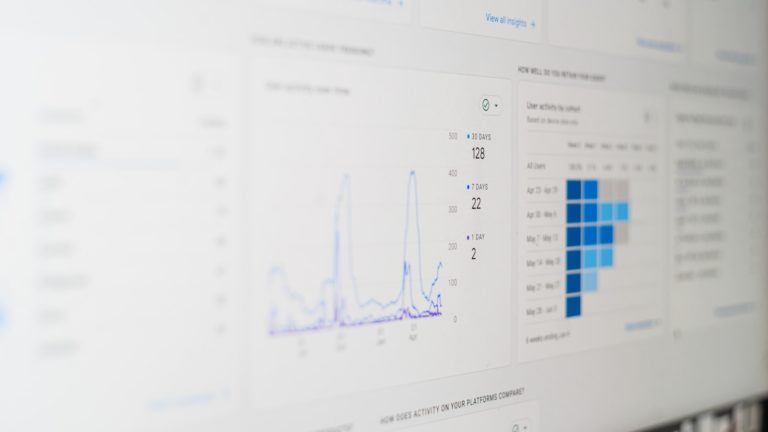
Many dashboards make you feel informed while hiding the most important number. They show bookings, revenue, maybe a conversion rate, but they don’t show where people quit. Or they show it in a way that’s hard to trust.
Owners then default to what they can see. They see fees. They see ad spend. They see OTA commission. They don’t see the 30 people yesterday who reached the payment step and left because the total looked different than expected. That’s why the hidden cost keeps winning.
If you want to understand how professional tools think about this, look at how platforms like Semrush discuss conversion rate optimization. Not to become a marketer. Just to see that “conversion” is not a vibe, it’s a measurable part of the business.
The boundary that matters: one team must own the full path
A booking journey is one system. Guests don’t care who built what. They don’t care that your engine is a separate product with its own interface. They judge the whole experience as one brand and one promise.
That’s why optimisation only works when one team owns the full path from landing page to confirmation email. Not because we want control for ego. Because without ownership, every fix becomes a debate, and debates don’t increase conversion.
We’ve watched owners spend money on “improvements” that were real improvements in isolation, but didn’t change bookings. The reason was simple: the weakest link stayed weak. The guest still hit the same friction point, so the leak stayed.
If you’re serious about direct sales, the decision is not “which engine has lower fees.” The decision is “who is responsible for the guest experience end-to-end, and who can prove what changed.”
Contact us
send us an email at web@underlab.gr
call us: +306980700070
send a message via WhatsApp
send an SMS
call or text us on Viber
How to think about this decision in business terms
Don’t frame it as a tech upgrade. Frame it like you would any other operational leak.
If you had a water leak in a rental, you wouldn’t negotiate the price of the bucket. You’d find where the leak is and stop it. Booking engine friction is the same kind of leak, just quieter. It doesn’t flood the floor. It drains your margin over a season.
A healthy direct channel is not one that “exists.” It’s one that converts at a level that makes your marketing spend sensible and your OTA dependence a choice, not a trap. In 2026, with ads more expensive and guests more impatient, friction costs more than it used to. That’s not drama, it’s just reality.
If you want us to look at it
We can review your booking flow as a guest would, focusing on friction and trust, not on feature lists. The output is owner-readable decisions: what is costing you bookings, what is simply annoying but tolerable, and what is outside the scope unless the system ownership is clarified.
If that’s the kind of clarity you want, you can reach us here:
Not sure where to start? Contact our local team for friendly, personalised advice and to arrange a meeting in person.
No shortcuts. No noise. Data analysis. Use only what works.